admin
admin
At first, Peter Dixon thought it was nothing more than a small spot on his nose.
But when the blemish refused to disappear, the 74-year-old British grandfather sought medical advice and received news that would change everything: it was skin cancer.
Doctors soon discovered another suspicious area on the opposite side of his nose. Removing the cancer meant that a significant portion of Peter’s nose had to be removed, leaving surgeons with an extraordinary challenge—how to rebuild it.
Instead of a prosthetic, specialists at Addenbrooke’s Hospital in Cambridge offered Peter a remarkable solution. They would use living tissue from his forehead to create a new nose.
For a time, the reconstruction created an unusual bridge of tissue stretching from Peter’s forehead to his nose. The appearance was so striking that it became known as an “elephant’s trunk.” Peter, however, faced the situation with humor, even though the experience affected his confidence.
He worried about how his five grandchildren would react and became more reluctant to leave home. His family noticed that the normally outgoing grandfather had become self-conscious and withdrawn.
Then came another delicate operation. Once the transplanted tissue had developed its own blood supply, surgeons separated the connection and carefully shaped the tissue into a more natural-looking nose.
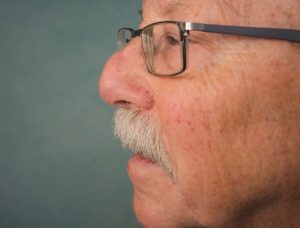
The result surprised Peter.
He could once again sniff and blow his nose normally, and he was happier with the appearance than he had expected.
There was even an unexpected reminder of the reconstruction: because the skin came from his forehead, hair could grow on his new nose.
Peter could laugh about that.
But behind the humor was a serious lesson. His journey began with a spot that seemed harmless, yet it ultimately required complex cancer treatment and reconstructive surgery.
His message to others was simple: protect your skin from excessive sun exposure—and don’t ignore changes that refuse to go away.