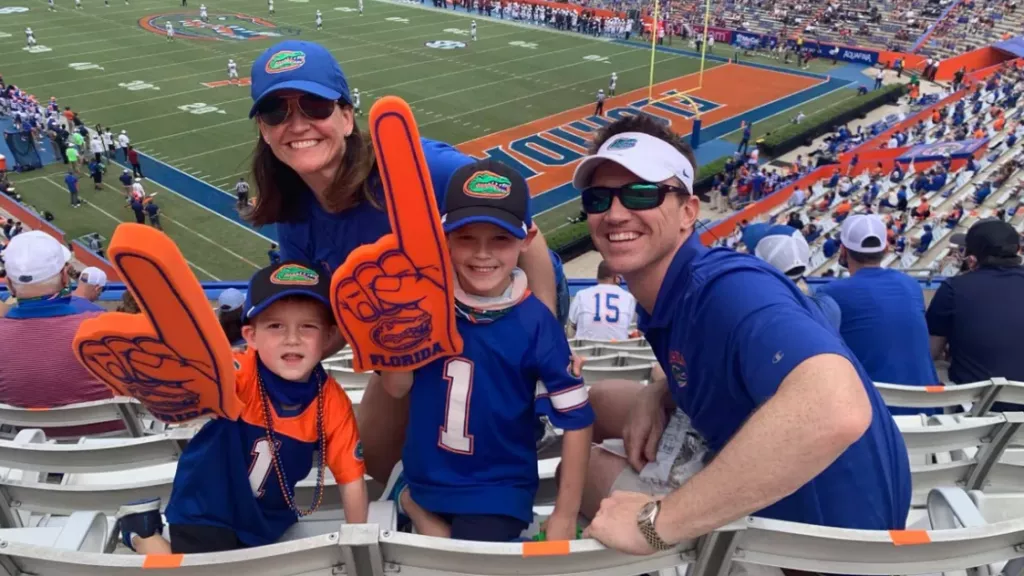
They had spent several days together doing something they loved. The fishing trip had brought relatives closer, given the children time with their family, and offered everyone a chance to enjoy the beginning of the holiday season. Soon, they would be back in Florida, reunited with the loved ones waiting for them.
But that reunion never happened.
On November 24, 2026, six members of two closely connected families from Fort Myers, Florida, were aboard a small aircraft returning from Louisiana when it disappeared over the Gulf of Mexico. What followed was an urgent search involving the U.S. Coast Guard, marine rescue teams, and local authorities. As the hours passed, the search area became clearer, but the hope of finding everyone alive grew increasingly difficult to hold on to.
The aircraft was a six-seat Cessna 210L, piloted by 50-year-old Brent Stokes. The family had traveled from Fort Myers to southeastern Louisiana several days earlier, departing Page Field on November 21 and flying to the Triumph Air Strip in Buras.
Their return journey began three days later. The plane left the Triumph Air Strip at 1:06 p.m. Central Time and landed at New Orleans Lakefront Airport at 1:19 p.m. After refueling, it took off again at approximately 2:02 p.m., heading toward Page Field in Fort Myers.
It was supposed to be the final part of an enjoyable family trip. Instead, it became the beginning of a tragedy.
The Final Minutes of the Flight
At approximately 3:45 p.m., air traffic controllers lost contact with the aircraft as it traveled toward Florida.
According to flight data cited in reports, the Cessna had been flying at around 9,000 feet before beginning a rapid descent of approximately 10,000 feet per minute. The aircraft was also reportedly turning to the right as it lost altitude.
Retired airline captain Steven Arroyo, who has decades of flying experience, reviewed the available tracking information and described the descent as highly irregular. The recorded communications did not appear to include a distress call from the pilot before contact was lost.
There was another detail investigators would need to examine. Shortly before the aircraft disappeared from contact, an air traffic controller at Gulfport–Biloxi International Airport had reportedly warned the pilot about precipitation and unfavorable weather in the area.
Aviation specialist Todd Curtis, a former Boeing safety engineer, explained that precipitation in below-freezing temperatures can create dangerous icing conditions. Ice can affect an aircraft’s instruments or reduce the lift needed to remain airborne.
However, no one has established that icing or weather caused this accident. Mechanical problems and other possibilities also need to be examined. The official cause remains unknown.
The aircraft went down in the Gulf of Mexico, approximately two nautical miles northeast of Horn Island, off the Mississippi coast.
What Rescuers Found in the Water
Once the aircraft disappeared, the U.S. Coast Guard coordinated a large search-and-rescue operation. Boats, aircraft, and marine rescue personnel were sent toward the suspected crash location.
The first discoveries came from a debris field approximately two miles northeast of Horn Island. Rescuers located the aircraft’s cabin, three life jackets, and a life raft.
But there was initially no sign of the six people who had been aboard.
The search continued through the evening. The Mississippi Department of Marine Resources joined the operation, along with local law enforcement and other rescue agencies. Crews used sonar equipment and a grid-based search to help locate the submerged aircraft.
Dispatch audio captured one of the difficult moments as responders reached the debris field. An officer reported over the radio that they were at the location of the plane and that debris was floating in every direction.
As the hours passed, conditions on the water became more challenging. Winds increased, and the waves grew rougher, making the work more difficult for the crews. Despite the worsening conditions, the different agencies continued coordinating their efforts.
Eventually, divers from the Mississippi Department of Marine Resources located the remains of all six occupants inside the aircraft’s fuselage. Authorities confirmed that the recovery had been completed at approximately 11:30 p.m.
The search had reached its heartbreaking conclusion.
The Six People Who Never Returned to Florida
Authorities identified the victims as Brent Stokes, 50; his 16-year-old son, Hunter; Brent’s sister, Arlyn Knox, 43; her husband, Michael Knox, 43; and their two sons, Charles Holden Knox, 12, and Truett Knox, 10.
All six lived in Fort Myers. They were members of two branches of the same family, brought together by a trip that was meant to be remembered for all the right reasons.
Brent was president of Stokes Marine, a company specializing in boat lifts, docks, and seawalls. Fishing and boating were not simply part of his work; they were also among his greatest interests. His company described him as a lifelong boater who loved spending time on the water with family and friends.
His sister Arlyn and her husband Michael had built a business of their own. The couple founded Knox Technology, an information technology company, in 2012. Both Brent and Michael also held private pilot certificates, which they had received in 2023.
The two Knox boys attended St. Francis Xavier Catholic School in Fort Myers. Charles was in sixth grade, while Truett was in fourth grade. Their school community had known the family for generations, making the loss especially painful for classmates, teachers, and parents.
The Memories Their Loved Ones Are Holding On To
As news of the tragedy spread, relatives shared a statement remembering the six people they had lost. They explained that the group had been celebrating the beginning of the holiday season with a fishing trip before returning home to reunite with the rest of the family.
Their words offered a glimpse of what the trip had meant to them. Even in the middle of their grief, the family wanted to remember that the six had been together, enjoying something they loved.
They also thanked the Coast Guard, the Mississippi Department of Marine Resources, and everyone who had taken part in the search and recovery operation. They asked for privacy while they supported one another, especially the children in the family.
Brent’s longtime friend, Fort Myers restaurateur Mike Gavala, remembered him as an ambitious businessman with a warm personality. Their friendship had lasted around 30 years, and they shared a love of boating, fishing, and aviation.
Gavala recalled encouraging Brent when he considered starting his marine construction business, even though he had no formal training in the field. He remembered him as hardworking, confident in his ideas, and someone whose conversations could go on for hours.
He also spoke about Hunter, describing the teenager as thoughtful and mature. Their fishing trips sometimes lasted 12 to 14 hours, giving them plenty of time to talk. Gavala said he could imagine the young man following in his father’s footsteps.
At St. Francis Xavier Catholic School, the principal expressed condolences and said the community would work to honor the lives and memories of Charles and Truett.
Investigators Still Have Questions About the Crash
The National Transportation Safety Board is leading the investigation with assistance from the Federal Aviation Administration. Investigators are examining the recovered wreckage, aircraft maintenance records, the pilot’s background, and air traffic control communications.
A preliminary report was expected within 30 days of the accident, although determining the probable cause could take much longer. For now, the rapid descent and the weather conditions remain important parts of the investigation, not confirmed explanations for what happened.
For the Stokes and Knox families, the answers may help explain the final moments of the flight, but they cannot change the loss.
Six relatives had boarded a plane after spending time together on a fishing trip. They were heading back to Florida, where the rest of their family was waiting. Their journey was supposed to end with familiar faces, home, and the beginning of the holiday season.
Instead, the people waiting for them received news that no family should ever have to hear.
And the words their loved ones shared afterward say what the photographs and memories cannot fully express: they will carry those six lives with them always.